How building workplaces where every brain belongs drives performance, retention & innovation
In an era of talent shortages, rising stress levels and the ever-increasing expectation for workplaces to deliver on inclusion, one truth stands out: neuroinclusion is not just a nice-to-have, it’s a business imperative.
The case for neuro-inclusive workplaces
- Research suggests that between 15–20% of UK employees are neurodivergent (i.e., their brain processes, learns or communicates differently).
- Yet, despite this prevalence, just around 3 in 10 working-age autistic people are in employment — compared to roughly 5 in 10 of all disabled people.
- In a 2024 survey by Chartered Institute of Personnel and Development (CIPD), nearly 1 in 5 neurodivergent employees (20%) reported experiencing harassment or discrimination at work because of their neurodivergence.
- Another study found that more than half (51%) of neurodivergent employees had taken time off because of their neurodivergence.
Clearly, there’s a gap — between the prevalence of neurodivergence and how well workplaces enable, support and embed that difference.
Why this matters for productivity, engagement and innovation
- UK productivity is a huge challenge: the average UK worker is reportedly productive for only about 2 hours 53 minutes per day.
- When employees feel motivated, data suggests their performance improves by around 20%.
- Given that neurodivergent individuals often bring unique strengths — pattern-recognition, intense focus, creativity, problem-solving from different angles — failing to support them means losing out on significant value.
Understanding the brain behind behaviour
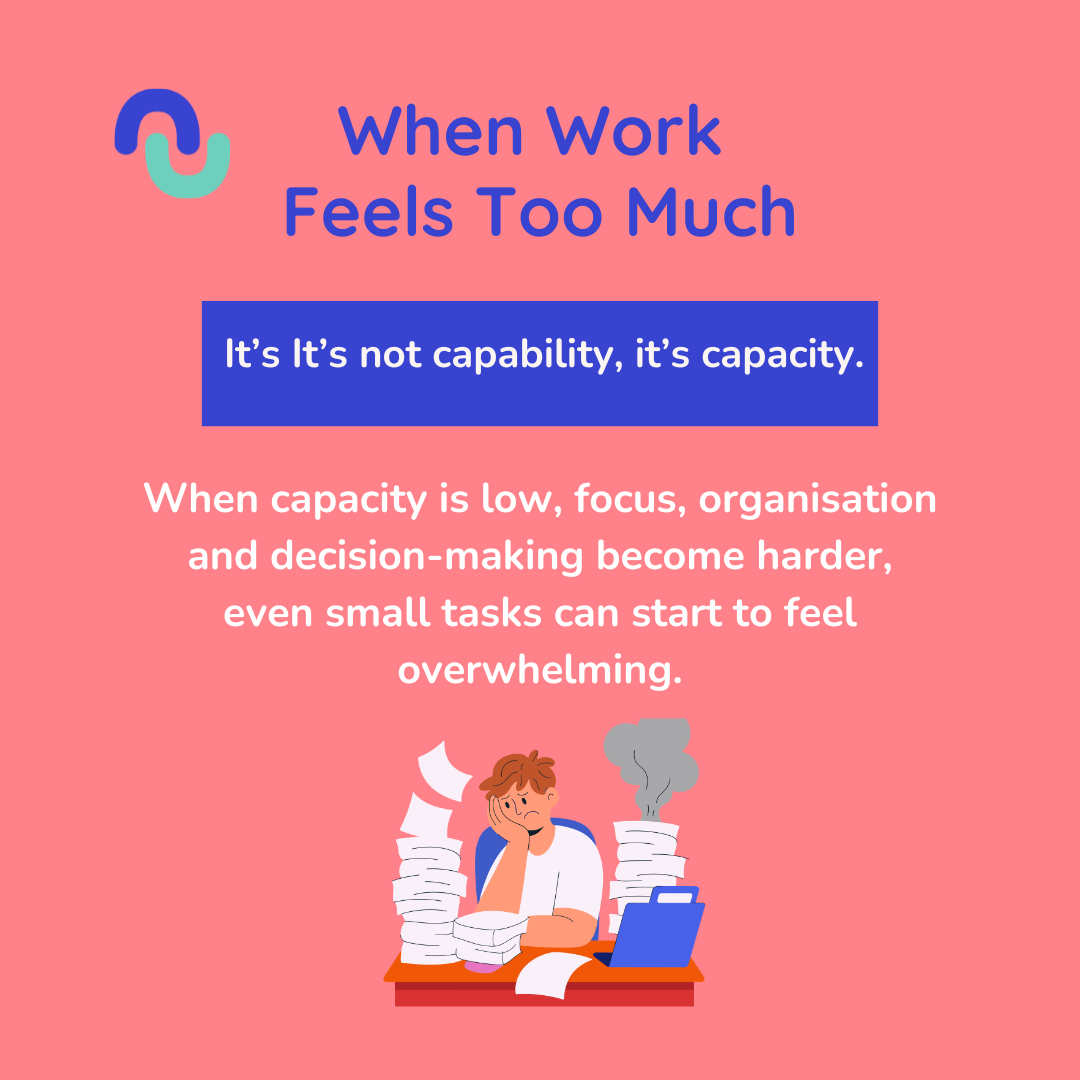
Many behaviours seen in the workplace—missed deadlines, lateness, overwhelm, difficulty prioritising—are often mis-labelled as performance issues. In reality, they may reflect executive function challenges: the brain’s ability to plan, organise, regulate attention/emotion, flex between tasks.
When leadership, managers and teams understand how these functions work (or don’t) they can build the culture, processes and support that enable individuals across neuro-types to thrive — not simply survive.
From compliance to connection: shifting the focus
It’s tempting to rely on policy, check-lists and training modules alone. But real inclusion is lived, not just documented. A neuro-inclusive workplace means:
- Creating psychological safety so people can show up as they are (rather than masking or hiding)
- Designing communication, workflows and roles that work for a variety of thinking styles
- Enabling teams to recognise strengths and scaffold around challenge — rather than simply “fixing deficits”
- Embedding ways of working that enable every brain to contribute to innovation and performance
Our Workshop Suite: Your Entry Point
At Connections in Mind we’ve designed a suite of workshops to help teams and organisations take the next step:
- Unconscious Bias & Neuroinclusion – Explore how assumptions shape decisions and how inclusive culture starts with awareness.
- The Neuroscience of Productivity – Discover how attention, energy, motivation and brain state impact outcomes.
- Executive Function Aware Workshop – Build insight into planning, emotional regulation, memory and organisation across teams.
- Executive Function Profiling – A team experience to surface strengths, barriers and practical collaboration strategies.
- Bespoke Workshops – Tailored to your organisation’s unique context, whether it’s a specific team, culture shift or executive function strategy.
Five guiding principles for neuro-inclusive workplaces
Based on the latest research (CIPD among others) these principles help guide action:
- Awareness & language – Treat neurodiversity not as a problem, but as a difference to be understood and harnessed.
- Culture & psychological safety – People must feel safe to disclose, to ask for adjustments and to bring their full selves to work.
- Practical scaffolding – Work-design, role clarity, communication style, task breakdowns and routines all matter.
- Leadership & accountability – Inclusion starts at the top — leaders must model inclusive behaviours and embed them in performance, culture and reward.
- Measurement & continuous improvement – Track inclusion outcomes, listen to neurodivergent voices and refine the approach over time.
What happens when you get it right?
Organisations that shift from tick-box diversity to brain-smart inclusion report:
- Higher retention and engagement among neurodivergent employees
- Better innovation outcomes because of diverse cognitive styles
- Lower absence and presenteeism, fewer hidden performance issues
- A culture where every brain matters, and every contribution counts
The Future of High-Performing Teams Is Neuroinclusive
Understanding how the brain works is the key to unlocking productivity, wellbeing and lasting competitive advantage.
Ready to take the first step?
Start with a workshop and begin building a culture where differences are understood, contributions are valued and performance is truly inclusive, meaningful and sustainable.